Why Stockbroker Onboarding Is Your Biggest Growth Asset

For many growing brokerage firms, business growth is built on trust.
Unlike larger institutions that rely heavily on marketing campaigns and brand visibility, smaller and regional brokers often grow through customer referrals, long-standing relationships, and reputation. In such a business environment, every interaction contributes to how investors perceive the firm.
One of the most important of these interactions is stockbroker onboarding.
Today, onboarding is no longer just an account-opening requirement. It is the stage where investor trust is established, compliance obligations are fulfilled, and long-term customer relationships begin. A smooth onboarding journey can strengthen confidence before the first trade is placed, while a complicated one can create uncertainty and discourage potential investors from completing registration.
As regulatory expectations continue to evolve and investors demand seamless digital experiences, brokers must rethink the role of onboarding. Done right, it becomes a powerful competitive advantage.
Why Stockbroker Onboarding Matters More Than Ever
For many investors, onboarding is the first meaningful interaction with a brokerage platform.
Before they explore products, execute trades, or engage with advisory services, they must complete registration and verification processes. The quality of this experience often shapes their perception of the brokerage itself.
An onboarding experience that feels slow, confusing, or fragmented can raise concerns about reliability and operational efficiency. On the other hand, a seamless process signals professionalism, transparency, and trustworthiness.
In an industry where trust is critical, onboarding often becomes the foundation upon which customer relationships are built.
Why Onboarding Is a Competitive Advantage for Small Brokers
Large brokers may compete through scale and brand recognition. Smaller brokers often compete through service quality and customer relationships.
This makes onboarding particularly important.
When customers join through referrals, a level of trust already exists. However, that trust can quickly diminish if onboarding introduces unnecessary friction.
Common frustrations include:
- Repeated document requests
- Multiple verification steps
- Long waiting periods
- Unclear instructions
- Delayed account activation
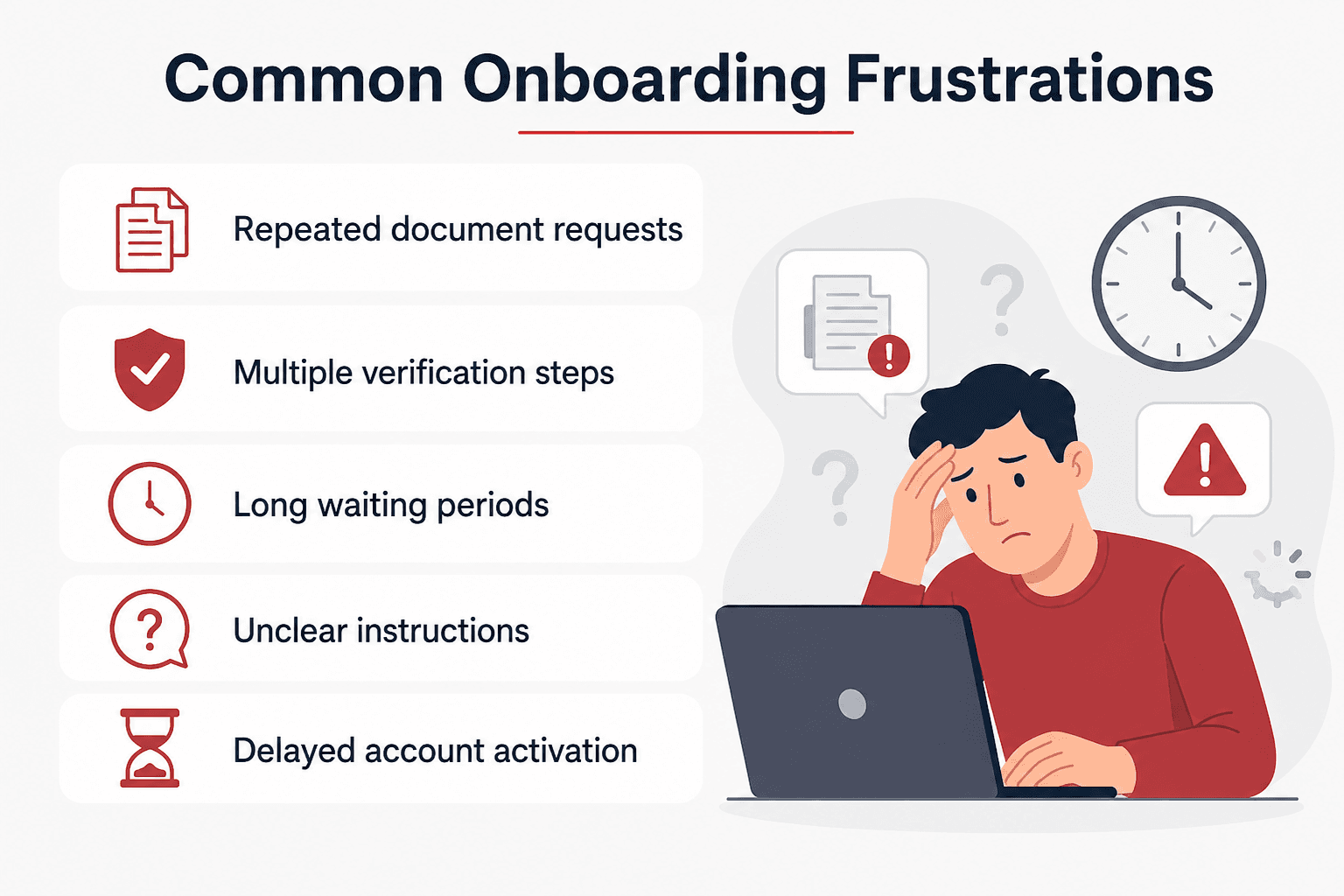
A positive onboarding experience reinforces confidence and increases the likelihood of future referrals. A poor experience can have the opposite effect.
For smaller brokers, onboarding is not merely an operational process—it is an extension of the customer experience.
Trust Begins Before the First Trade
Opening a trading account requires investors to share sensitive information, including:
- Aadhaar details
- PAN information
- Bank account details
- Identity verification documents
Because of this, investors naturally seek reassurance throughout the onboarding journey.
They want confidence that their personal information is being handled securely and responsibly. They expect transparency regarding verification requirements and timelines.
A well-designed onboarding experience communicates:
- Security
- Reliability
- Professionalism
- Transparency
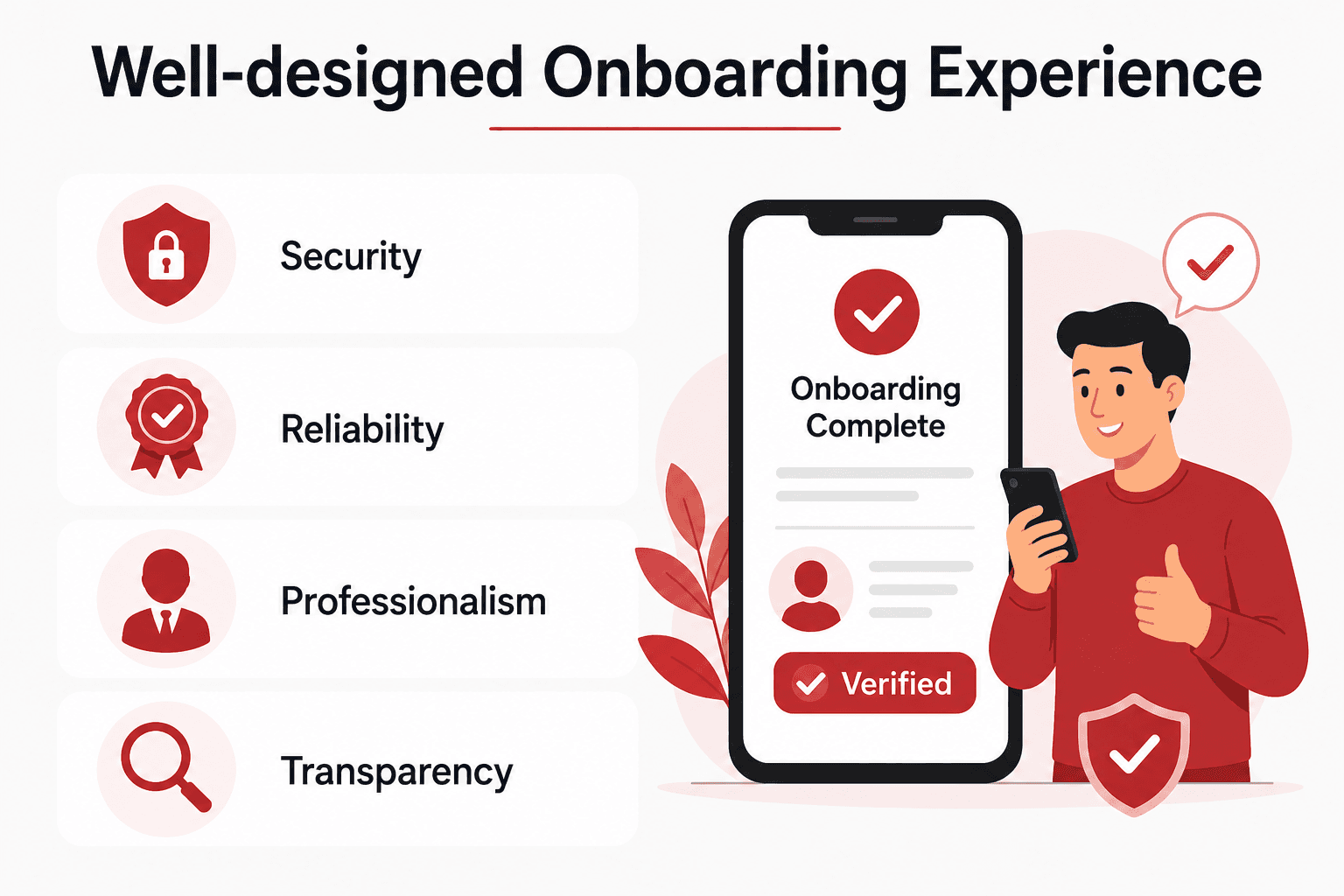
Every step should reinforce trust rather than create uncertainty.
For many investors, the onboarding journey becomes the first indication of how the broker will operate throughout the customer relationship.
SEBI-Compliant Onboarding Without Customer Friction
Regulatory compliance is a fundamental part of every stockbroker's onboarding journey. However, modern investors expect onboarding to be as seamless as the digital experiences they encounter across banking and fintech platforms.
Today's onboarding process extends well beyond identity verification. Brokers must ensure compliance across multiple regulatory requirements, including investor identity validation, nominee declaration, consent management, document authentication, and record maintenance.
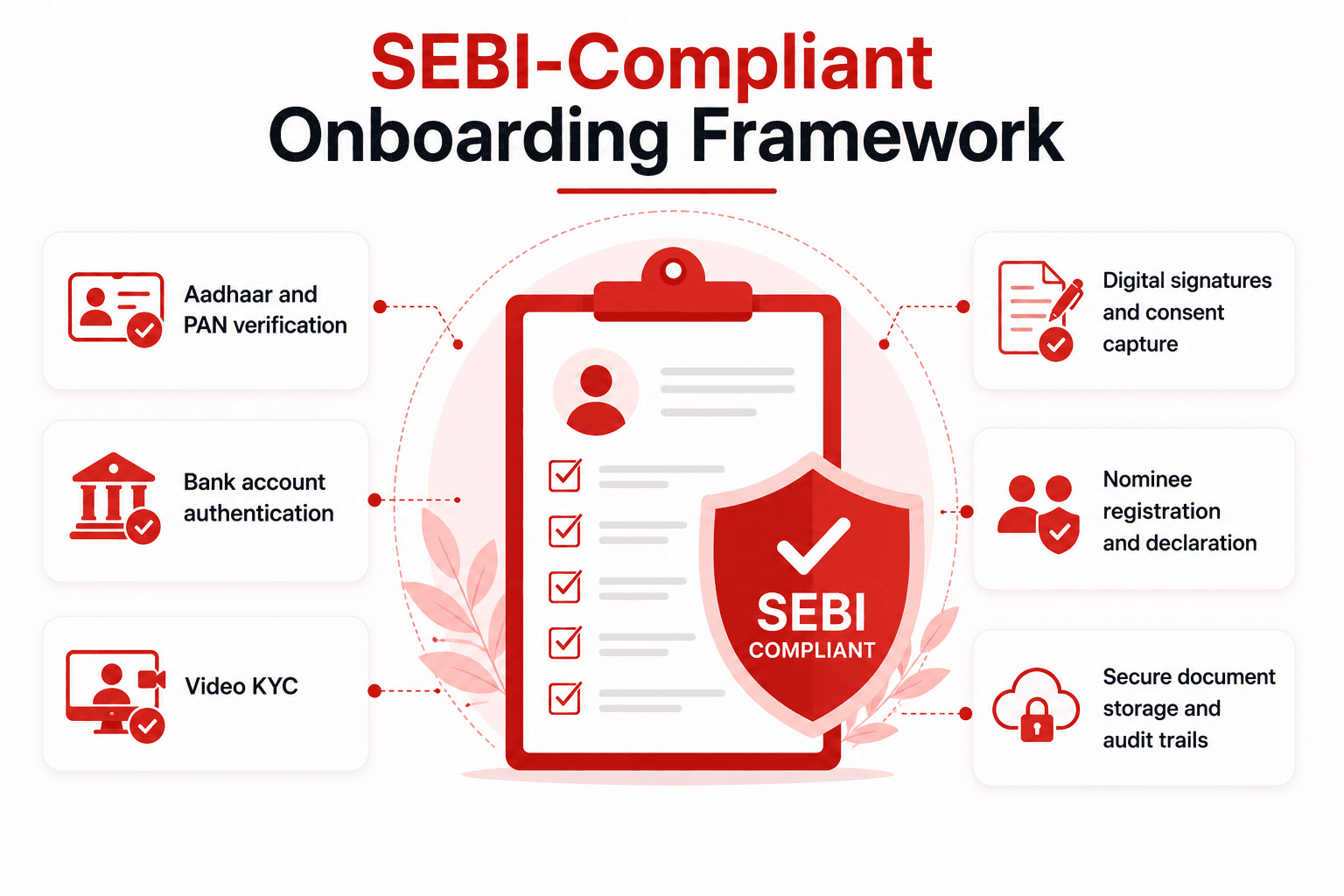
A robust SEBI-Compliant Onboarding framework typically incorporates:
- Aadhaar and PAN verification
- Bank account authentication
- Video KYC
- Digital signatures and consent capture
- Nominee registration and declaration
- Secure document storage and audit trails
One of the most significant regulatory updates in recent years has been SEBI's revised nomination framework for demat accounts and mutual fund folios. Under the updated guidelines, investors can nominate up to 10 nominees for a single account and specify percentage allocations for each nominee. If allocation percentages are not provided, the holdings are distributed equally among the nominees. The revised framework was introduced to simplify asset transmission, reduce unclaimed financial assets, and provide greater flexibility for investors while maintaining stronger regulatory records.
As a result, brokers must ensure that nominee addition, modification, allocation management, and opt-out declarations are seamlessly integrated into the onboarding experience rather than treated as separate operational processes. This requires onboarding systems that can manage regulatory documentation efficiently while maintaining a smooth user journey.
The challenge for brokers is not compliance itself—it is delivering compliance without introducing unnecessary friction.
Historically, onboarding workflows relied on fragmented systems and manual interventions, often resulting in:
- Repeated data entry
- Multiple document submissions
- Verification delays
- Inconsistent customer records
- Extended activation timelines
As regulatory expectations continue to evolve, brokers are increasingly adopting digital-first onboarding frameworks that embed compliance directly into the customer journey. Automated verification, integrated workflows, digital consent mechanisms, nominee management, and centralized documentation help ensure regulatory adherence while simplifying the experience for investors.
The objective is no longer just completing KYC requirements. It is creating an onboarding experience that satisfies compliance obligations, maintains accurate regulatory records, supports audit readiness, and enables investors to open accounts with confidence and ease.
Strengthening the Investor Verification Process
An effective Investor Verification Process is critical for both compliance and trust.
Verification helps brokers confirm customer identity, prevent fraud, and meet regulatory requirements. At the same time, investors expect the process to be quick and intuitive.
Challenges often arise when verification workflows involve:
- Repetitive information requests
- Multiple disconnected systems
- Manual interventions
- Delayed approvals
Modern onboarding platforms simplify the investor verification process through automation and integrated workflows.
Features such as Aadhaar authentication, PAN validation, face matching, and digital signatures help create a smoother experience while ensuring verification accuracy.
A streamlined verification process not only improves compliance but also enhances customer confidence from the very beginning.
Regulatory Compliance for Brokers Beyond KYC
Many firms associate compliance primarily with KYC verification. However, Regulatory Compliance for Brokers extends much further.
Brokers must also manage:
- Documentation Consistency: Customer records must remain accurate, complete, and accessible across systems.
- Regulatory Readiness: Processes must adapt to evolving regulatory requirements without creating operational disruptions.
- Risk Management: Verification controls help reduce fraud, prevent errors, and improve governance.
- Operational Accountability: Organizations must maintain clear records of verification activities, approvals, and customer interactions.
Strong compliance frameworks help brokers maintain operational integrity while reducing regulatory risk.
How Better Onboarding Helps Reduce Onboarding Drop-Offs
One of the most common challenges brokers face is onboarding abandonment.
Even when investors intend to open an account, friction during onboarding can discourage completion.
Common causes include:
- Lengthy forms
- Multiple verification stages
- Lack of progress visibility
- Confusing workflows
- Delayed responses
To Reduce Onboarding Drop-Offs, brokers must focus on simplicity and transparency.
Breaking onboarding into smaller steps can significantly improve completion rates.
Step 1: Mobile and email verification
Step 2: Aadhaar and PAN validation
Step 3: Bank account authentication
Step 4: Nominee and trading preferences
Step 5: Selfie, eSign, and activation
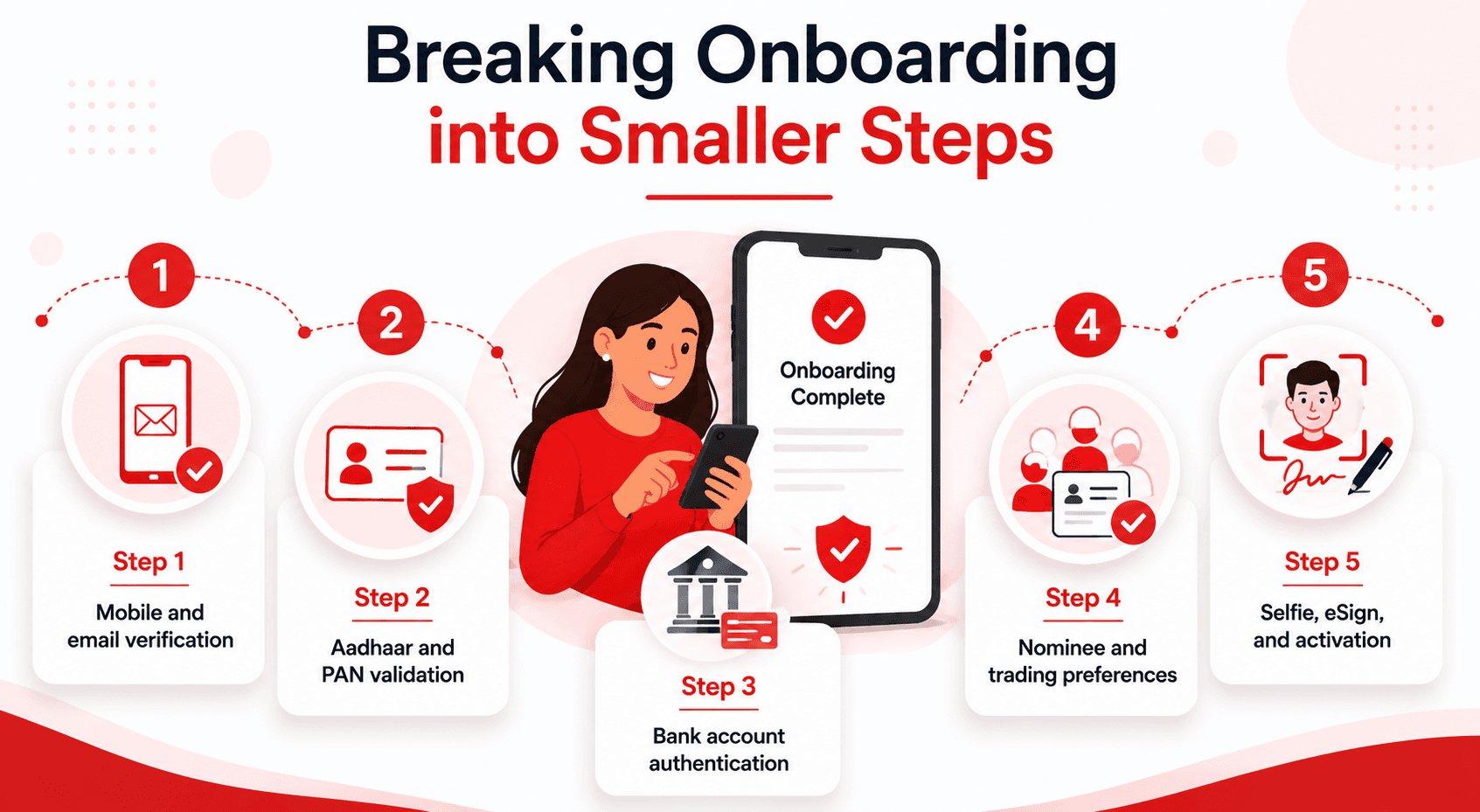
This structured approach creates momentum while helping investors understand where they are in the process.
Clear communication and real-time updates further reduce uncertainty and improve completion rates.
Why Audit Readiness Is Becoming a Competitive Advantage
As regulations evolve, audit preparedness has become increasingly important.
Many brokers still rely on manual processes and fragmented systems for record management. This creates challenges when responding to audits or regulatory reviews.
Modern onboarding platforms help create centralized and traceable records throughout the customer lifecycle.
Benefits include:
- Better record management
- Simplified compliance reviews
- Faster audit preparation
- Reduced regulatory risk
While investors may never directly see these advantages, they contribute significantly to the stability and credibility of the brokerage firm.
The Referral Multiplier Effect
Trust remains one of the most powerful growth drivers for smaller brokerage firms.
Investors who experience:
- Secure onboarding
- Transparent communication
- Efficient verification
- Reliable account activation
are more likely to recommend the platform to others.
A positive onboarding experience reinforces the perception that the broker is professional, trustworthy, and customer-focused.
Over time, these experiences compound into:
- Stronger customer loyalty
- Better retention
- Increased referrals
- Sustainable growth
For brokers that depend heavily on relationships and reputation, this referral effect can become a significant competitive advantage.
Conclusion
Stockbroker onboarding is no longer just a compliance requirement.
It is where trust, customer experience, operational efficiency, and regulatory responsibility come together.
A well-designed onboarding journey helps brokers establish credibility, strengthen investor confidence, improve regulatory compliance for brokers, and reduce onboarding drop-offs. At the same time, it creates a more efficient investor verification process and supports long-term audit readiness.
As competition continues to grow, brokers that invest in seamless and SEBI-compliant onboarding experiences will be better positioned to build trust, strengthen customer relationships, and achieve sustainable growth.
In an industry built on confidence and credibility, onboarding is often the first step toward lasting success.