Stop Chasing Leads. Start Fixing Your Broker Onboarding Process
For high-growth stockbrokers, customer acquisition is often not the biggest challenge. Marketing campaigns are generating leads, referral programs are driving registrations, and brand awareness continues to grow.
The real challenge begins after the lead is acquired.
Many brokers invest heavily in digital marketing, partnerships, and customer acquisition campaigns, only to lose potential customers during the onboarding stage. Every incomplete application, delayed verification, or abandoned registration directly impacts the return on marketing investment.
As onboarding volumes increase, many brokerage firms face a difficult question:
How do you scale account openings without proportionally increasing operational costs and manual effort?
The answer lies in creating a broker onboarding process that is built for growth, automation, and efficiency.
In this article, we'll explore why onboarding becomes a bottleneck for growing brokers and how modern digital onboarding infrastructure helps solve it.
The Hidden Cost of Onboarding Drop-Offs
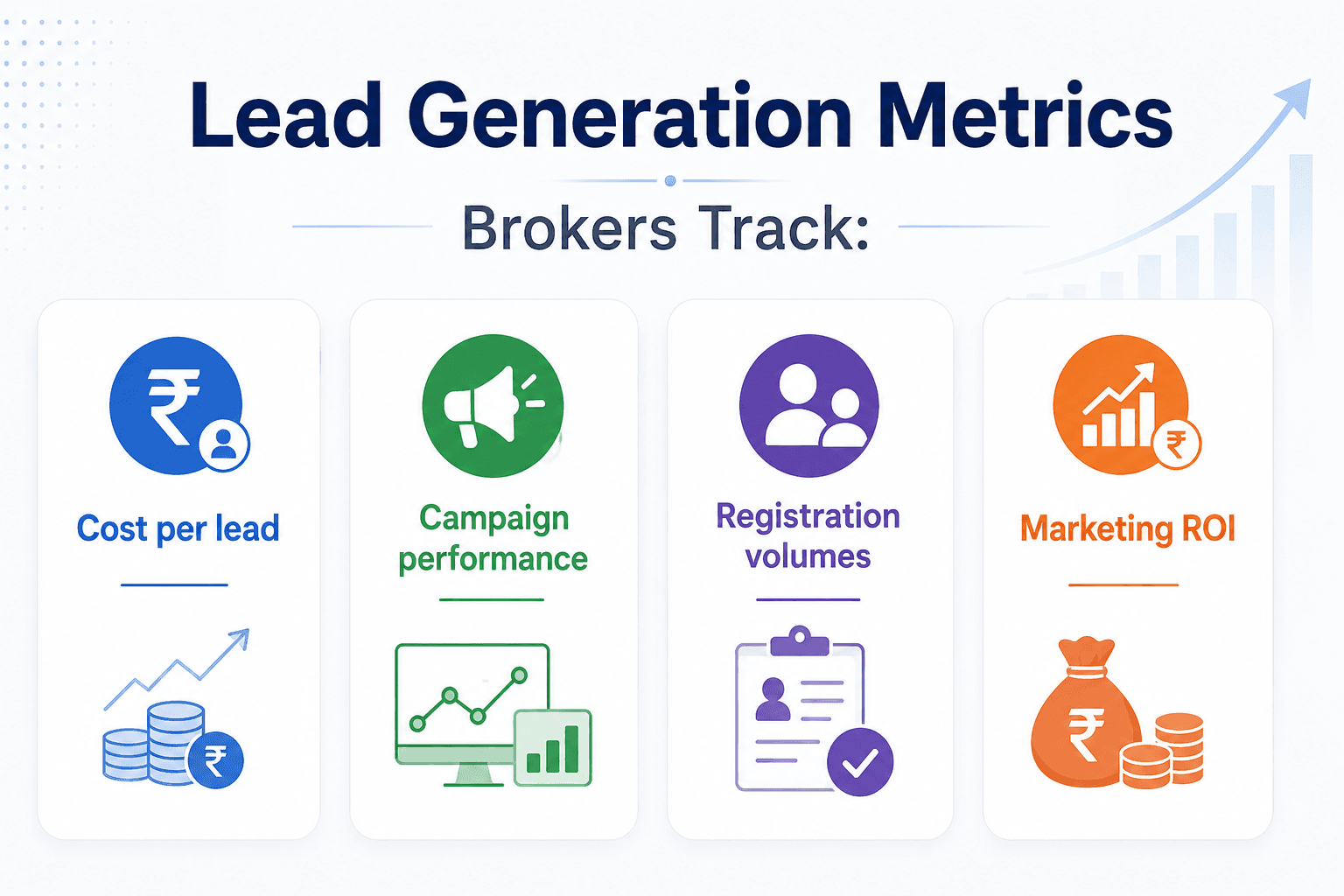
Most brokers closely track lead generation metrics such as:
- Cost per lead
- Campaign performance
- Registration volumes
- Marketing ROI
However, many overlook one of the most expensive leakages in the acquisition funnel: onboarding drop-offs.
A customer who completes registration but fails to activate an account represents a lost acquisition opportunity. The marketing cost has already been incurred, but the customer never reaches the trading stage.
When onboarding volumes are low, these losses may seem manageable. But for brokers acquiring hundreds or thousands of users each month, even small drop-off percentages can translate into significant revenue loss.
The reality is simple: Every onboarding friction point reduces the effectiveness of your customer acquisition efforts.
Why Marketing Performance Alone Isn't Enough
Many brokerage firms focus on increasing lead volumes through:
- Digital advertising
- Influencer campaigns
- Partner networks
- Referral programs
- Investor education initiatives
While these efforts generate interest, they do not guarantee account activation.
A high-performing marketing engine paired with a weak onboarding experience creates a disconnect between acquisition and conversion.
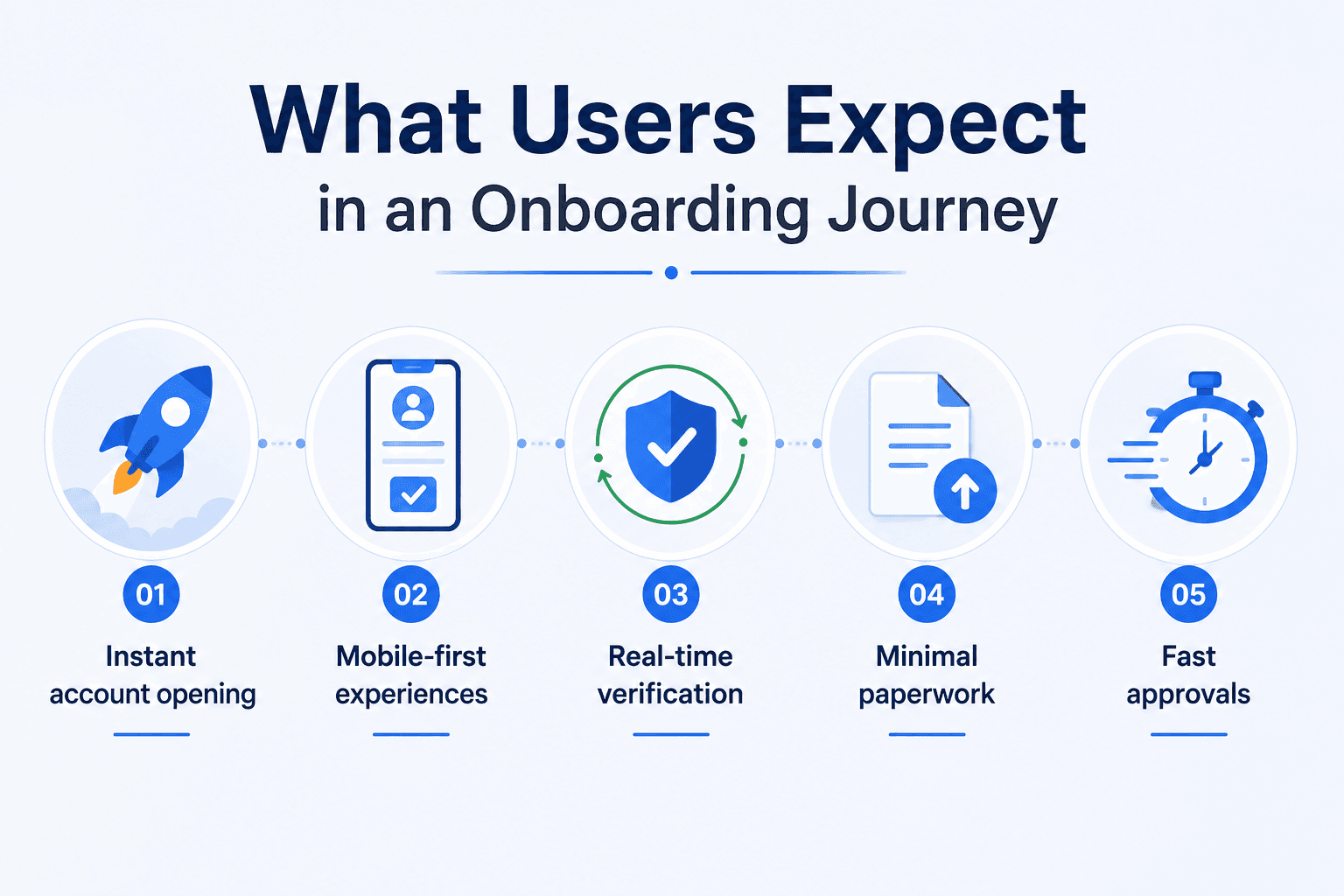
Users today expect:
- Instant account opening
- Mobile-first experiences
- Real-time verification
- Minimal paperwork
- Fast approvals
If onboarding fails to meet these expectations, customers often abandon the process and move to a competitor that offers a smoother experience.
In today's brokerage landscape, onboarding has become just as important as acquisition.
The Bottleneck Between Lead Generation and Activation
As brokers grow, onboarding often becomes the operational bottleneck that limits scalability.
The challenge is not generating leads.
The challenge is converting those leads into active traders efficiently.
Many brokers continue to rely on fragmented onboarding systems involving:
- Multiple verification vendors
- Manual document reviews
- Disconnected workflows
- Approval queues
- Repetitive customer interactions
These inefficiencies become increasingly visible as onboarding volumes rise.
Without scalable infrastructure, growth creates operational strain instead of business value.
Common Scaling Challenges in the Broker Onboarding Process
High Onboarding Volumes
When customer acquisition campaigns perform well, onboarding teams often struggle to keep pace.
Higher registration volumes can lead to:
- Longer processing times
- Increased support requests
- Approval backlogs
- Reduced customer satisfaction
Manual workflows that work for hundreds of accounts quickly become unsustainable when volumes reach thousands.
Transaction Failures
Every failed transaction during onboarding increases the likelihood of abandonment.
Common issues include:
- OTP failures
- Aadhaar authentication interruptions
- Payment gateway errors
- API timeouts
- Connectivity issues
When users encounter repeated failures, confidence in the platform decreases immediately.
High-growth brokers need onboarding systems that are designed for reliability, resilience, and scale.
KYC Verification Delays
KYC is a mandatory part of the broker onboarding process, but it is often one of the biggest sources of friction.
Traditional KYC workflows frequently involve:
- Manual document uploads
- Repeated data entry
- Offline verification dependencies
- Delayed approvals
For users accustomed to instant digital experiences, these delays feel outdated and frustrating.
The longer verification takes, the higher the probability of drop-offs.
Approval Bottlenecks
Many brokers still rely heavily on manual approval mechanisms.
This creates challenges such as:
- Internal review queues
- Back-office dependency
- Human verification delays
- Increased operational workload
As onboarding volumes increase, manual approvals become a significant growth constraint.
Without automation, scaling customer acquisition often requires scaling operational teams as well.
How Automated eKYC Helps Brokers Scale
Modern eKYC for stockbrokers has transformed onboarding from a manual process into a highly automated digital journey.
Instead of relying on multiple disconnected verification systems, brokers can integrate automated workflows that handle verification in real time.
A modern eKYC framework typically includes:
- Aadhaar verification
- PAN validation
- Bank account verification
- Face matching
- Video KYC
- Digital signatures
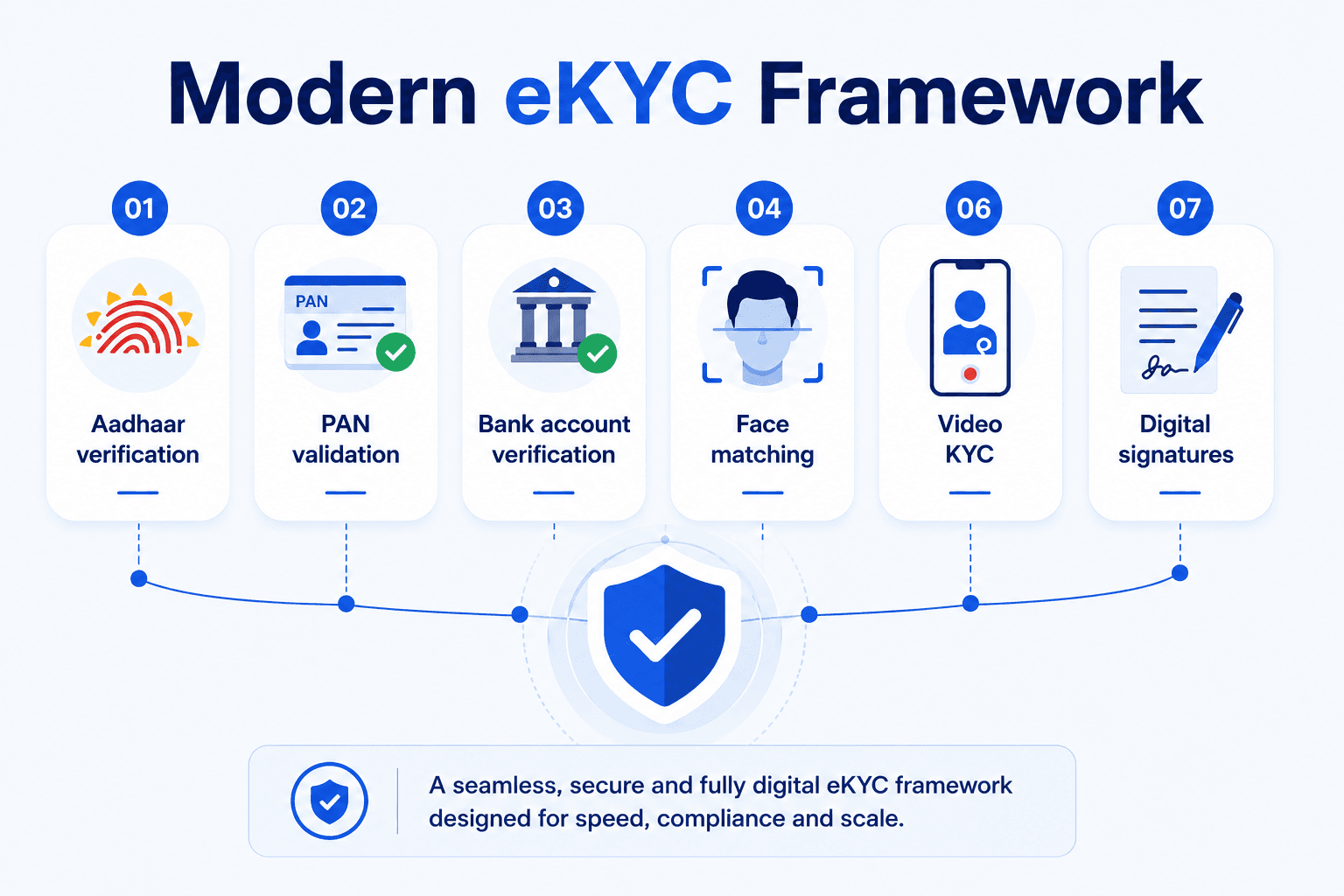
These processes work together seamlessly to reduce friction while maintaining compliance requirements.
The result is a significantly faster onboarding experience for customers and a more efficient operating model for brokers.
Building an Onboarding Infrastructure That Matches Marketing Growth
For high-growth brokers, onboarding infrastructure must evolve alongside acquisition efforts.
A scalable onboarding system should be designed around four core principles:
Automation
Reduce dependency on manual verification and approval processes.
Automation enables brokers to process higher volumes without increasing operational headcount.
Reliability
Ensure high uptime and stable integrations across verification services.
Every second of downtime directly impacts conversions.
User Experience
Simplify onboarding through:
- Progressive onboarding steps
- Mobile-first design
- Real-time validation
- Clear progress indicators
A smoother experience translates directly into higher activation rates.
Integration
Modern onboarding systems should integrate seamlessly with:
- Trading platforms
- Back-office systems
- CRM tools
- Payment gateways
- Analytics platforms
Integrated ecosystems create greater efficiency and visibility across the entire customer journey.
The Business Benefits of Modern Digital Onboarding
When brokers invest in scalable digital onboarding for brokers, the benefits extend beyond compliance and operations.
- Higher Conversion Rates: Reducing onboarding friction helps convert more registrations into active trading accounts.
- Faster Account Activation: Automated verification significantly reduces the time required to open and activate accounts.
- Lower Operational Costs: Automation reduces manual intervention, support workload, and verification overhead.
- Better ROI on Acquisition Campaigns: Every improvement in onboarding conversion enhances the return on marketing investments.
Instead of spending more to acquire additional customers, brokers maximize the value of the leads they already generate.
Conclusion
For high-growth brokers, customer acquisition is only half the equation.
The real opportunity lies in converting those acquired leads into active customers efficiently and consistently.
As onboarding volumes increase, manual processes, fragmented systems, and operational bottlenecks become increasingly costly. Without scalable infrastructure, growth can quickly outpace operational capacity.
A modern broker onboarding process powered by automated eKYC, intelligent workflows, and seamless user experiences enables brokers to scale account openings without scaling operational costs.
The firms that succeed in the coming years will not simply be those that generate the most leads. They will be the ones that build onboarding systems capable of converting those leads into customers quickly, reliably, and at scale.
By investing in intelligent digital onboarding for brokers today, brokerage firms can create a sustainable growth engine that improves conversions, enhances customer experience, and maximizes the return on every acquisition effort.